

IPhone 17 Screen Protector: The Definitive Guide to Display Protection in 2026
2026 Jul 2nd
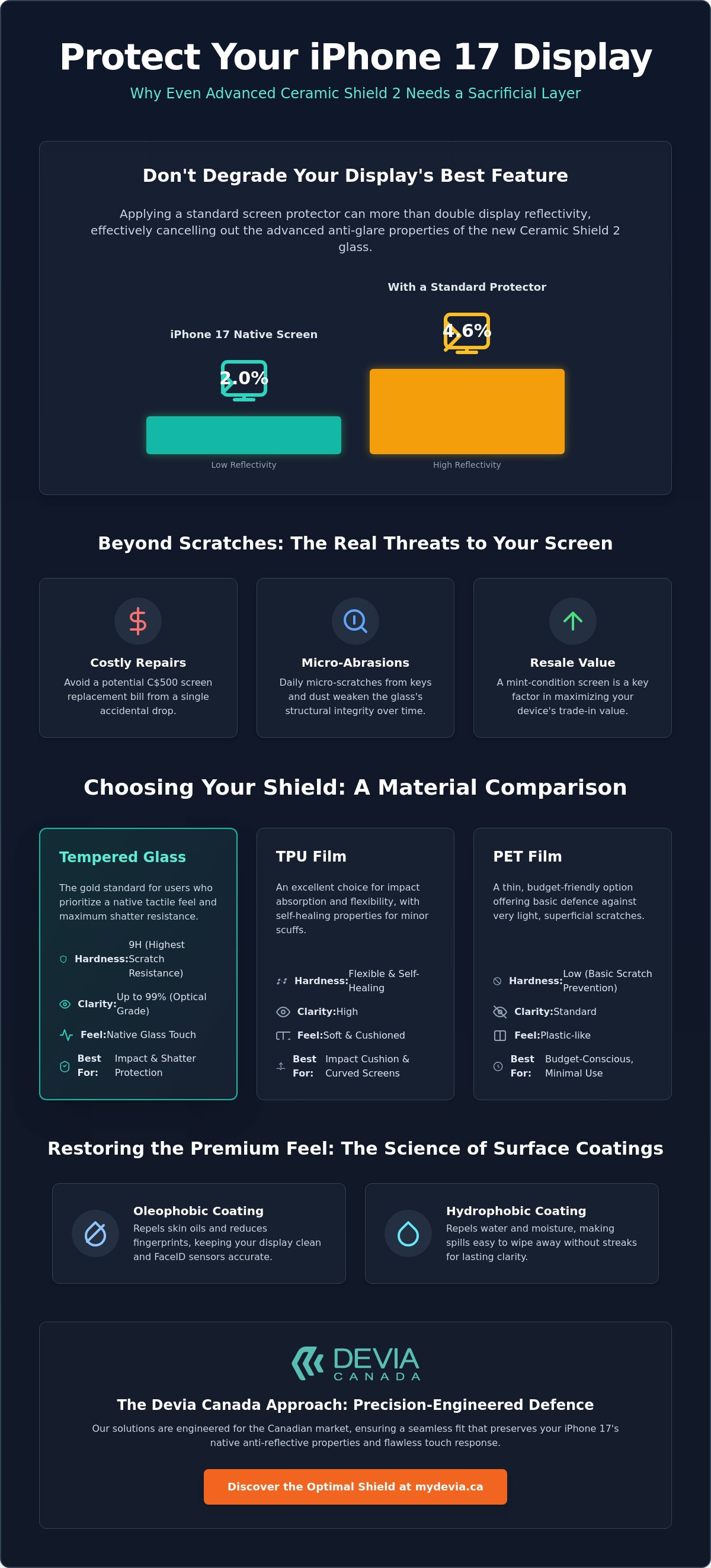
What if the very tool meant to protect your device actually degrades its best feature? Most users realize that applying a standard iphone 17 screen protector can increase display reflectivity from 2.0% to 4.6%. This effectively cancels out the advanced anti-glare properties of the new Ceramic Shield 2 glass. You want to preserve a mint-condition look and protect your resale value. You shouldn't have to sacrifice visual clarity or FaceID speed to do it.
It's logical to worry about a C$500 repair bill or the annoyance of permanent micro-scratches. You need a durable solution that is easy to organize and install without the typical frustration of trapped bubbles. This guide details the technical differences between modern materials like 9H tempered glass and specialized anti-reflective coatings. We'll show you how to realize the optimal defence for your iPhone 17 display while maintaining seamless touch response. We'll compare current material standards and provide a methodical look at the best protection strategies for 2026.
Key Takeaways
- Understand why a sacrificial layer is essential for absorbing kinetic energy and preventing micro-abrasions that weaken your display's structural integrity.
- Compare the 9H hardness of a tempered glass iphone 17 screen protector against the self-healing flexibility of TPU films to find your ideal match.
- Learn why even advanced Ceramic Shield displays require external protection to balance the technical trade-off between glass hardness and impact toughness.
- Identify the specific protector thickness and material type required to maintain optimal touch sensitivity based on your daily environment and device usage.
- Discover how precision-engineered solutions ensure a seamless fit for the Canadian market while maintaining the device's native anti-reflective properties.
The Fundamentals of Screen Protector Technology
A screen protector acts as a technical sacrificial layer. It's engineered to fail so your expensive display doesn't. When you install an iphone 17 screen protector, you're adding a barrier designed to absorb and dissipate kinetic energy from impacts. While the iPhone 17 features the latest Ceramic Shield 2, no glass is entirely invincible. The primary threat isn't always a single catastrophic drop; it's the accumulation of micro-abrasions. These tiny scratches create stress points that weaken the structural integrity of the glass over time. Screen protector technology has evolved from basic PET films into sophisticated multi-layered hybrid solutions. These modern designs prioritize maintaining factory-standard colour and optical clarity. They ensure the vibrant display remains sharp while providing a necessary buffer against the keys and coins commonly found in a user's pocket.
How Screen Protectors Distribute Impact Force
Impact protection relies on the specific physics of energy redirection. When a device hits a hard surface like concrete, the protector takes the initial shock. The material compresses and spreads the force across its entire surface area; this reduces the pressure on any single point of the underlying glass. High-quality protectors utilize a specialized silicone adhesive layer. This layer serves two critical purposes. It absorbs vibration to prevent internal component damage and acts as a containment system. If the protector shatters, the adhesive keeps glass shards from scattering. This prevents sharp fragments from scratching the original screen or causing injury. A precision-engineered shield maintains the device's centre of gravity and preserves the original tactile feel.
The Role of Oleophobic and Hydrophobic Coatings
The out-of-the-box feel of a new iPhone comes from its factory-applied chemical treatments. Oleophobic coatings are oil-repellent layers that reduce fingerprint smudges and face oils. Hydrophobic coatings repel water and environmental moisture. Over months of regular use, these layers naturally wear off due to friction and cleaning. Applying an iphone 17 screen protector restores this premium interface.
- Smudge Resistance: High-grade oleophobic layers ensure skin oils don't cloud the display or interfere with FaceID sensors.
- Maintenance Efficiency: Hydrophobic properties make it simple to wipe away moisture or spills with a microfibre cloth without leaving streaks.
- Tactile Consistency: These coatings provide a smooth, low-friction surface for gestures and typing, mimicking the native glass.
Maintaining these coatings is essential for clarity. A protector ensures the native screen remains in mint condition, which is a key factor for Canadians looking to maximize trade-in values at the end of a device's lifecycle. It provides a professional, clean aesthetic while ensuring the hardware remains fully functional under heavy use.
Comparing Materials: Tempered Glass vs. TPU and PET Films
Choosing an iphone 17 screen protector requires understanding the technical trade-offs between glass and polymers. The 9H hardness rating found on most packaging refers to the pencil hardness scale, not the Mohs mineral scale. It signifies that the surface resists scratches from a 9H lead pencil, which is the hardest standard pencil available. Tempered glass offers the highest scratch resistance and optical clarity, typically reaching 99% transparency. TPU (Thermoplastic Polyurethane) provides impact cushion and flexibility, while PET (Polyethylene Terephthalate) remains a thin, budget-friendly option for basic scratch prevention.
Tempered Glass: The Gold Standard for Impact Resistance
Manufacturers produce tempered glass through intense thermal and chemical treatments to organize its molecular structure into a high-tension state. This process makes the glass significantly stronger than standard soda-lime variants. Research into the Impact resistance of screen protector materials confirms that glass excels at absorbing sharp, high-velocity impacts. It shatters into small, blunt pieces to protect the underlying display. For a deeper dive into common misconceptions, check out our tempered glass screen protector myth vs. reality guide. Glass remains the preferred choice for users who prioritize a native tactile feel and maximum shatter resistance.
TPU and Hybrid Films: Flexible Protection for Modern Curves
TPU is a chemically enhanced plastic that offers a softer, more rubbery tactile experience compared to the rigid feel of glass. It's essential for devices with significant screen curvature or edge-to-edge displays where rigid glass might lift. One of its standout features is self-healing. Minor abrasions in the TPU layer can disappear over time as the material's elastic properties allow it to reform under ambient heat or friction. While its transparency is slightly lower than glass, typically around 95%, its ability to wrap around the iPhone 17's contours makes it a reliable choice for full-frame coverage.
PET films are the thinnest and most cost-effective option available. They provide a hard, clear surface that resists light scratches but offers minimal protection against drops. If you prioritize a sleek profile and basic scratch defence, PET is a viable choice. However, most Canadian users find that the superior feel and durability of tempered glass justify the investment. You can browse a curated selection of premium protectors to find the material that fits your specific lifestyle requirements. Selecting the right material ensures your device remains functional and clear for years to come.
Do Modern Devices Really Need Extra Protection?
Modern smartphone glass is a technical marvel. However, the belief that Ceramic Shield 2 makes an iphone 17 screen protector unnecessary is a misunderstanding of material science. In glass engineering, there is a constant trade-off between hardness and toughness. Toughness refers to the ability to absorb impact without shattering, while hardness refers to the ability to resist scratches. Apple prioritizes toughness to prevent catastrophic screen failure during drops. This choice often leaves the display susceptible to abrasions from environmental materials like quartz and sand, which are harder than the glass itself. Even a high-end device remains vulnerable to the elements of daily life.
The Reality of Micro-Scratches and Structural Integrity
Everyday contact with pockets, desks, and bags creates invisible damage over time. Even if you never drop your phone, microscopic particles like grit or dust act as abrasives against the display. These small scratches are more than just cosmetic flaws; they act as stress concentrators. When a phone hits the ground, the kinetic energy travels through the glass and seeks out these existing weak points, significantly increasing the risk of a full shatter. Micro-abrasions occur even without a major drop event, slowly compromising the screen's structural integrity. Utilizing various screen protector materials provides a renewable surface that absorbs these daily micro-shocks and keeps the factory glass intact.
Maintaining Resale and Trade-In Value
For Canadian users, the physical condition of a device directly dictates its market value. On local trade-in platforms and secondary marketplaces, the price difference between "Mint" and "Good" condition can be substantial. A single visible scratch on the display often drops a device's category, potentially costing you over C$150 in lost value. Investing in an iphone 17 screen protector ensures the native glass remains in pristine condition for the duration of your ownership. This small upfront cost realizes a significant return when it is time to upgrade to a newer model. For total security, pair your shield with a high-quality barrier from our iPhone 17 case guide. Maintaining a perfect screen is the most efficient way to protect your digital investment.
Selection Framework: Choosing the Right Shield for Your Lifestyle
Selecting the ideal iphone 17 screen protector requires a methodical evaluation of your daily environment and device usage. In 2026, display technology features higher refresh rates and more sensitive under-display sensors than previous generations. A protector that is too thick can introduce touch latency or interfere with biometric authentication. You must balance material thickness with the specific sensitivity requirements of the iPhone 17 hardware. Most professional-grade tempered glass options sit between 0.26mm and 0.33mm to ensure a native response time while providing a necessary buffer against impact.
User profiles dictate the best material choice. Office professionals often prioritize privacy filters. These specialized layers limit the viewing angle to 30 degrees; this prevents visual hacking of confidential data in public spaces. Outdoor enthusiasts require matte finishes to diffuse direct sunlight and reduce glare. Casual users typically prefer standard high-transparency glass to realize the full colour accuracy of the OLED panel. Regardless of the profile, a case-friendly design is essential. Protectors must be slightly undersized to prevent the edges of a phone case from making contact and lifting the glass, which leads to unsightly air pockets and dust accumulation.
Device-Specific Requirements: Phones, Watches, and Tablets
Different form factors present unique protection challenges. An Apple Watch screen protector requires exceptionally high impact resistance because the wrist is prone to frequent bumps against hard surfaces like doorframes or gym equipment. In contrast, an iPad screen protector must prioritize a low-friction surface to maintain Apple Pencil precision for digital artists and students. Even users transitioning from older hardware should note that an iPhone 16 screen protector may have different sensor cutout requirements than the 17 series. Each device in your ecosystem needs a tailored approach to ensure full functionality.
Environmental Considerations for Canadian Users
Canadian users often face extreme lighting conditions, from high-glare snowy landscapes to bright office environments. If you frequently work outdoors, a matte or anti-reflective coating is a functional necessity. For those in labour-intensive industries or high-risk environments like construction sites, a double-tempered glass shield is the recommended standard. It provides the highest level of shatter resistance for the display. Minimalist users can realize a balance between protection and aesthetics by choosing ultra-thin 0.20mm glass, which provides scratch defence without altering the device's sleek profile. To find a solution that matches your specific daily routine, explore our range of precision-cut protectors designed for the modern Canadian consumer.
Premium Display Defence: The Devia Canada Approach
Selecting an iphone 17 screen protector from a curated inventory is superior to choosing generic bulk options. Mass-produced packs often suffer from inconsistent material density and reduced optical clarity. Devia Canada focuses on precision fit and high-grade materials tailored for the Canadian market. Professional-grade silicone adhesives ensure a stable, bubble-free bond that remains reliable across varying temperatures. These adhesives leave no residue upon removal; this allows you to maintain the device's original look and feel without a complex cleaning process. We prioritize a methodical selection process to ensure every shield meets high-performance standards.
Quality Control and Material Integrity
Testing standards for clarity and touch response are exceptionally high. Every shield is measured for light transmission to keep display colours accurate. The iPhone 17 utilizes advanced under-display biometric sensors that require specific glass properties. Devia Canada ensures full compatibility by using ultra-clear glass that doesn't distort signals. Precision-cut designs and included alignment tools remove the guesswork during installation. This methodical approach prevents dust ingress and ensures the edges stay sealed against the display for the long term.
Integrating Your Protection Strategy
Effective device management requires a holistic approach. Screen protection is a critical component, but it works best when combined with a total security strategy. Pair your iphone 17 screen protector with a precision-moulded case for complete coverage. An organized tech setup also includes your peripheral environment. For professional laptop productivity, the DEVIA USB C Laptop Docking Station Leopard Series (11 in 1) offers a multi-port Type-C hub and stand. It streamlines your workspace connectivity while keeping your mobile devices secure and accessible.
Preserving your technology is a logical investment. It ensures your device remains functional, aesthetically pleasing, and valuable for years. A systematic approach to protection prevents costly repairs and maintains the premium interface you expect from Apple hardware. Efficiency and reliability are the core of our selection process.
Protect your display today with Devia Canada screen protectors.
Secure Your Display for the Long Term
Protecting a flagship device in 2026 requires a methodical approach to material science. You now understand that a high-quality iphone 17 screen protector does more than prevent cracks; it preserves the specific optical properties and sensor sensitivity of your hardware. By selecting a precision-engineered sacrificial layer, you ensure that environmental grit and daily impacts don't compromise your screen's structural integrity. Maintaining a mint-condition display is the most efficient way to realize the maximum resale value for your device in the Canadian market.
Our curated selection features high-transparency materials designed for zero display distortion. These solutions are precision-engineered for 2026 flagship devices and backed by Devia Canada's national support. Don't leave your display's safety to chance when a logical, durable solution is readily available.
Browse Premium Screen Protectors for iPhone, Samsung, and iPad
Take the final step in your device protection strategy today. It's a simple investment that ensures your technology remains as functional and clear as the day you unboxed it.
Frequently Asked Questions
Does a screen protector reduce touch sensitivity on the iPhone 17?
High-quality protectors don't reduce touch sensitivity. Modern capacitive displays are engineered to register input through tempered glass up to 0.33mm thick. Ensure your protector uses a premium silicone adhesive to maintain a seamless bond with the display and prevent any input lag.
Can I install a screen protector myself without getting bubbles?
You can achieve a bubble-free installation by using a precision alignment tool. Most premium kits include a mounting tray that centres the glass perfectly. It's best to perform the installation in a dust-free environment, such as a bathroom after a hot shower, to keep airborne particles from being trapped under the adhesive.
What is the difference between 2.5D and 3D tempered glass?
The difference lies in the edge geometry. 2.5D glass is flat across the surface with a slight taper at the extreme edges to prevent sharpness. 3D glass features a deeper curve that mimics the device's screen profile for edge-to-edge coverage. 2.5D options are generally more compatible with rugged phone cases.
Will a screen protector interfere with the iPhone 17 under-display sensors?
Quality materials won't block the under-display sensors or FaceID. An iphone 17 screen protector must have high optical transparency to ensure biometric data is read accurately. Low-grade glass or thick plastic films can cause sensor distortion; it's essential to use high-clarity tempered glass to maintain native performance.
How often should I replace my screen protector?
You should replace the protector as soon as you notice visible chips, deep scratches, or edge lifting. Even a hairline crack compromises the shield's structural integrity and reduces its ability to absorb impact. Most active users find that replacing the protector every six to twelve months maintains the best visual clarity.
Is liquid screen protection as effective as tempered glass?
Liquid coatings are not as effective for impact protection. They create a chemical bond that helps resist micro-scratches and smudges but lack the physical density to absorb energy from a drop. Tempered glass remains the only reliable sacrificial layer for preventing a shattered display.
Does a screen protector affect the colour accuracy of my display?
Premium glass maintains 99% transparency and doesn't alter colour accuracy. Cheap PET films can sometimes introduce a yellow tint or a "rainbow" effect under bright lights. A high-grade iphone 17 screen protector ensures you realize the full vibrancy and contrast of the OLED panel without distortion.
Are screen protectors compatible with all phone cases?
Not all protectors work with every case. You must look for "case-friendly" designs that are slightly undersized to prevent the case's lip from pushing against the glass. This ensures the protector doesn't lift at the corners when you install a protective shell on your device.