

How to Choose and Install an iPhone 16 Screen Protector: The 2026 Guide
2026 Jun 18th
A high-quality screen protector is designed to fail. While that sounds counterintuitive, its primary job is to sacrifice itself by shattering so your $1,199 iPhone 16 Pro Max display remains intact. Investing in a premium iphone 16 screen protector is the most efficient way to preserve your device's resale value and functional integrity.
You likely realize how frustrating a botched installation can be. There is nothing worse than a persistent bubble in the centre of your screen or a crooked edge that lifts every time you snap on your favourite case. These issues don't just look bad; they compromise the Super Retina XDR display's clarity and reduce the precision of your touch response. It's a common pain point that often leads to wasted materials and unnecessary expense.
This guide provides a systematic approach to selecting and applying professional-grade protection. You will learn to distinguish between 9H tempered glass and modern hybrid composites while mastering a bubble-free application technique. We cover everything from alignment precision to case compatibility, ensuring your iPhone 16 remains protected without sacrificing its sleek design.
Key Takeaways
- Identify the specific vulnerabilities of the iPhone 16 display and learn how to mitigate high repair costs with proactive shielding.
- Compare the clarity of tempered glass against the security of privacy filters to find the right iphone 16 screen protector for your daily environment.
- Decode technical specifications like 9H hardness and 0.33mm thickness to ensure your protection doesn't compromise the Super Retina XDR experience.
- Use professional installation tactics, including the dust-reducing steam method, to eliminate alignment errors and persistent bubbles.
- Ensure total hardware compatibility by pairing your protector with case-friendly designs that prevent edge lifting and maintain touch responsiveness.
Why the iPhone 16 Display Demands Professional-Grade Protection
The iPhone 16 series features the most advanced Super Retina XDR displays to date. With sizes ranging from 6.1 inches on the base model to a massive 6.9 inches on the Pro Max, these panels are high-value assets. However, the move toward thinner bezels across the lineup has increased the physical exposure of the glass. While the Ceramic Shield is robust, it isn't invincible. A professional iphone 16 screen protector acts as a critical sacrificial layer. It absorbs kinetic energy that would otherwise shatter the primary OLED panel. Protection is mandatory.
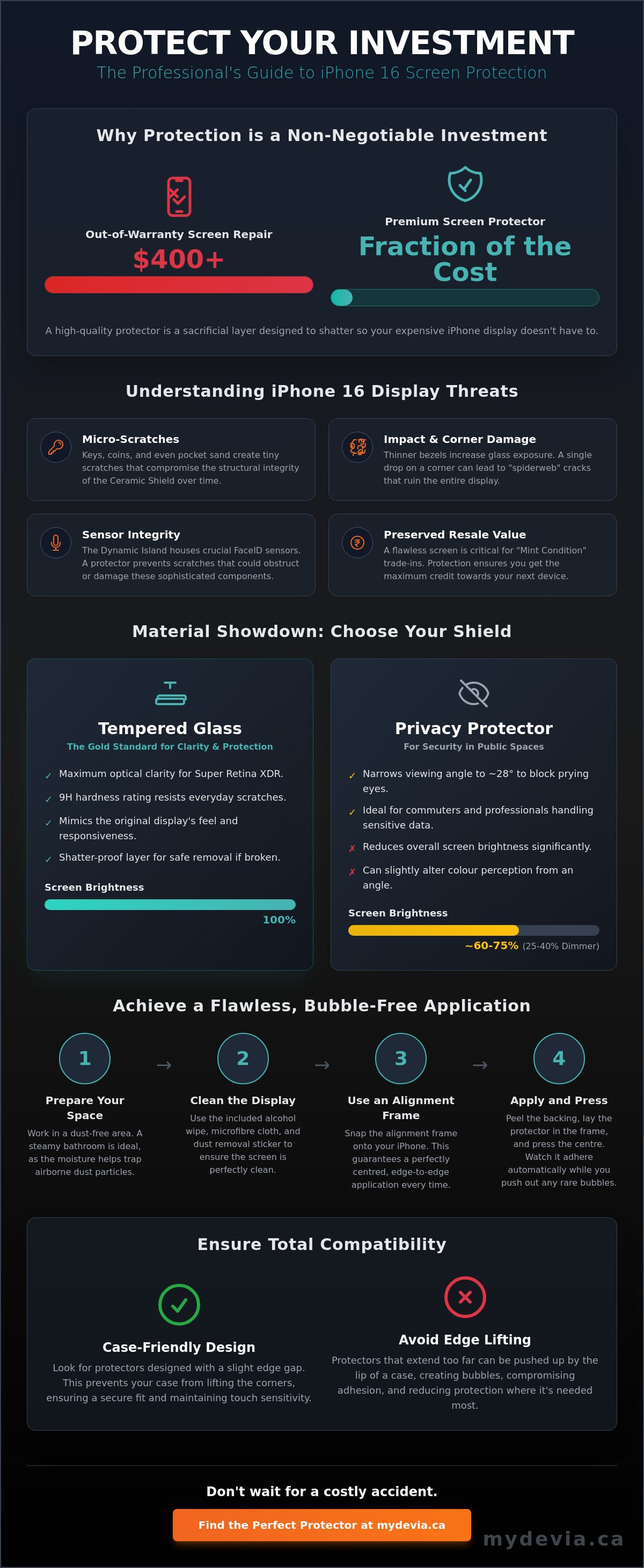
Repairing a damaged display in Canada is a significant financial burden. Industry data suggests that out-of-warranty screen replacements for flagship devices often exceed $400. This makes a high-quality protector a logical insurance policy. Users quickly realize that the cost of prevention is a fraction of the cost of repair. Beyond impact resistance, professional-grade glass maintains the factory oleophobic coating. This coating is essential for repelling fingerprints and ensuring that the display's colour accuracy remains sharp over time.
Understanding iPhone 16 Display Vulnerabilities
Modern displays face constant threats from microscopic debris. Pocket sand and metal keys can easily create micro-scratches that weaken the glass structure. The iPhone 16 Pro models feature specialized 120Hz ProMotion technology that relies on precise touch sensitivity. Understanding screen protector materials and history helps users select options that don't interfere with this responsiveness. Edge-to-edge designs are particularly vulnerable at the corners. A slight impact on the thinner bezel can lead to spiderweb cracks. These cracks radiate from the point of contact to the centre of the display and compromise the entire surface.
Preserving Resale Value for Future Upgrades
For many Canadian users, the iPhone is an asset to be traded in. Trade-in programs in Canada prioritize "Mint Condition" devices, allowing users to upgrade to their favourite new models with maximum credit. A single deep scratch on the display can drop a device's trade-in value significantly. Efficiency matters when managing your tech budget.
- Ceramic Shield Integrity: Continuous friction can wear down the original surface. This makes it more prone to damage over time.
- Sensor Protection: The Dynamic Island houses sophisticated FaceID sensors. A screen protector ensures these sensors remain unobstructed by scratches.
- Visual Clarity: High-transparency glass ensures that the 2,000 nits peak brightness isn't dimmed by inferior materials.
Using an iphone 16 screen protector ensures the device looks as good on the day of resale as it did on the day of purchase. It's a systematic approach to device maintenance.
Comparing iPhone 16 Screen Protector Materials: Glass vs. Privacy
Choosing the right material determines both the longevity and usability of your device. While there are different types of screen protectors available, tempered glass remains the industry standard for the iPhone 16 series. It offers a calculated balance of scratch resistance and impact absorption that plastic films cannot match. Every material choice involves trade-offs between clarity, security, and tactile response.
The Superiority of Tempered Glass
Tempered glass with a 9H hardness rating is the gold standard for high-end protection. It mimics the original feel of the iPhone 16 display while providing a sacrificial layer that shatters upon impact to save the underlying OLED. High-quality glass includes a shatter-proof layer. This ensures that if the protector breaks, the shards stay together, keeping your fingers safe during removal. It maintains the factory touch sensitivity, ensuring the 120Hz ProMotion display feels fluid and responsive.
Privacy and Specialized Functionality
Privacy protectors use micro-louver technology to narrow the viewing angle to approximately 28 degrees. This is essential for Canadian commuters on the GO Train or TTC who want to secure sensitive data from prying eyes. However, users should realize these filters can reduce screen brightness by 25 to 40 percent. Anti-reflective coatings are another specialized option, improving outdoor visibility in direct sunlight. Many modern protectors also feature antimicrobial treatments to reduce bacteria buildup from frequent touch, a functional benefit for daily hygiene.
The iPhone 16 camera array is equally exposed and requires specialized shielding. Lens protectors offer precise coverage for each sensor without degrading photo quality. This is particularly important for the Pro models with their larger lenses. When selecting an iphone 16 screen protector, you must also decide between matte and glossy finishes. Glossy finishes preserve the vibrant colours of the Super Retina XDR display, while matte finishes are superior for fingerprint resistance and glare reduction.
Efficiency in protection means choosing a product that fits your specific lifestyle. If you prioritize visual fidelity, a high-transparency screen protector is the most logical choice. For those working in public spaces, the security of a privacy filter outweighs the slight reduction in brightness. Always verify that the chosen material supports the full range of dynamic touch gestures required for iOS 26.5.
Technical Specifications: Hardness, Thickness, and Transparency
Technical data matters. It separates professional-grade equipment from budget film. For the iPhone 16 series, specifications aren't just details; they're performance requirements. High-quality tempered glass typically targets a light transmission rating of over 92%. This ensures that the vibrant Super Retina XDR colours remain undistorted and peak brightness remains high. Precision in manufacturing prevents the "rainbow effect" often seen in cheaper alternatives. Transparency must be absolute to maintain the high-dynamic-range (HDR) performance of the OLED panel.
Specifications define the functional limits of an iphone 16 screen protector. While marketing focuses on aesthetics, technical data determines how the glass performs under stress. Choosing the right specs ensures that your device remains functional and protected without compromise.
Decoding the 9H Hardness Rating
The tech industry uses the pencil hardness scale to measure scratch resistance. It's often confused with the Mohs scale of mineral hardness, but they are distinct systems. 9H hardness is the industry standard for scratch resistance in 2026. This rating signifies that the surface can withstand pressure from the hardest standard graphite pencils. While it easily resists common pocket items like keys, coins, and even steel blades, users should realize that harder minerals like quartz found in sand can still cause abrasions. The 9H rating is a benchmark for daily durability in urban environments.
Thickness and Touch Response
Material thickness is a calculated trade-off. A 0.33mm profile represents the industry "sweet spot" for an iphone 16 screen protector. Glass that's too thin lacks the structural integrity to absorb heavy impacts. Conversely, excessively thick glass can impede haptic touch and reduce the sensitivity of the iPhone 16's new capacitive buttons. Maintaining a thin profile is essential for the front-facing sensor array. High-quality protectors ensure that Face ID and ambient light sensors function with zero latency. Precision-cut edges allow for seamless interaction with the display's boundaries while maintaining compatibility with various protective cases.
Coverage options further define the user experience. Edge-to-edge coverage provides a seamless look that follows the 2.5D or 3D curves of the glass. However, case-friendly cutouts are often more practical for those using rugged protection. They leave a microscopic gap at the perimeter. This prevents the case from pushing against the protector, which causes edge lifting and air bubbles. Efficiency in protection requires choosing the right balance for your specific hardware setup.
How to Install Your iPhone 16 Screen Protector Perfectly
A professional installation is the difference between invisible protection and a distracting mess. Most Canadian retailers provide the hardware but fail to explain the nuances of application for the specific iPhone 16 dimensions. Dust is your primary adversary. To mitigate this, create a controlled environment. The bathroom steam trick remains the most effective DIY method. Run a hot shower for a few minutes until the room is slightly humid. This moisture grounds airborne dust particles, preventing them from settling on your display during the critical seconds of application.
Surface preparation requires a systematic approach. Begin by using the provided alcohol wipe to dissolve skin oils and smudges. Follow this with a lint-free microfibre cloth to dry the surface completely. Even if the screen looks clean, microscopic debris likely remains. Use the dust removal sticker across the entire surface area. Precision is key here. Any leftover particle will create a permanent air bubble once the iphone 16 screen protector is seated.
Step-by-Step Application Guide
- Thorough Cleaning: Remove all oils and fingerprints using a high-concentration alcohol pad.
- Particle Removal: Dab the display with a dust sticker to catch microscopic debris.
- Alignment: Utilize an Easy Align tray if provided. If applying manually, use the top speaker port and the Dynamic Island as your primary reference points.
- Adhesion: Lower the glass onto the screen. Apply firm pressure at the centre of the protector. The adhesive will spread outward in a controlled wave, pushing air toward the edges.
Efficiency in application saves time and resources. If you want to ensure a professional finish on the first attempt, browse our inventory for a premium screen protector with an included alignment tool.
Troubleshooting Common Installation Issues
Errors happen. If you spot a dust speck after application, don't peel the entire protector off. Gently lift the nearest corner with a fingernail or plastic tool. Use a small piece of adhesive tape to "fish" the particle out from the underside of the glass. If the edges are lifting, it's usually due to a slight misalignment. You can often resolve this by applying sustained pressure for sixty seconds. However, if the adhesive is contaminated or the glass is cracked, you must realize the protector is compromised. A damaged protector cannot provide the structural integrity required to save your display from a drop.
Maintenance and Pairing with iPhone 16 Cases
The interaction between your iphone 16 screen protector and your external hardware defines the longevity of your device. Many users realize too late that a mismatched protector and case can lead to wasted money. When a case is too tight, it exerts inward pressure on the edges of the glass. This leads to lifting, which allows dust to enter the adhesive layer. Once contaminated, the protector usually requires replacement. Systematic selection is the only way to avoid this cycle of waste.
Achieving 360-Degree Protection
Total device security requires a calculated pairing of materials. Pairing your glass with professional-grade iPhone 16 cases creates a seamless defensive barrier. Case-friendly protectors are specifically designed to accommodate the raised edges of protective covers. This prevents overlap issues where the case lip pushes against the tempered glass. For the most comprehensive setup, include camera lens protectors. These specialized shields protect the expensive optics of the iPhone 16 without introducing lens flare or ghosting in high-contrast environments. It's a systematic approach to hardware safety.
Long-Term Care for Your Screen Protector
Durability depends on maintenance. Fingerprints and smudges are inevitable, but they shouldn't be handled with household cleaners. Harsh chemicals like window cleaner can dissolve the oleophobic coating. This layer is responsible for that smooth, factory-fresh screen feel. Use a clean microfibre cloth for daily maintenance. If deep cleaning is required, a damp cloth with a microscopic amount of dish soap is safer than chemical solvents. For a detailed breakdown of material longevity, read the tempered glass screen protector myth vs. reality guide.
End-of-life identification is critical for maintaining protection standards. Look for these specific signs:
- Hairline fractures that catch the light during use.
- Delamination or bubbling at the corners or edges.
- A permanent "greasy" appearance caused by significant coating wear.
- Micro-chips along the perimeter of the glass that feel sharp.
A professional mobile ecosystem is about more than just the phone. It's about how that phone integrates with your daily workstation. A device secured with a high-quality iphone 16 screen protector fits perfectly into the cradle of the DEVIA USB C Laptop Docking Station Leopard Series. This 11-in-1 hub allows for fast charging and multi-port connectivity, turning your protected iPhone into a functional part of your desktop environment. Efficiency remains the central priority in a well-organized digital workspace.
Secure Your iPhone 16 Display Investment
Professional screen protection is a calculated necessity. Maintaining the Super Retina XDR display requires a balance of 9H hardness and precise 0.33mm thickness. You now understand the technical trade-offs between tempered glass and privacy filters. Mastery of the steam installation method ensures a bubble-free finish that preserves the device's original aesthetic. Efficiency in device maintenance prevents costly repairs and maximizes future trade-in value in the Canadian market.
Selecting the right iphone 16 screen protector is the final step in a comprehensive hardware strategy. Devia Canada offers precision-engineered solutions designed specifically for the latest iPhone dimensions. Our 9H hardness rated glass provides the sacrificial layer needed to absorb heavy impacts without sacrificing touch sensitivity. Benefit from Canadian-based shipping and support for a seamless upgrade experience.
Shop Premium iPhone 16 Screen Protectors at Devia Canada and ensure your device remains in mint condition. Protecting your technology is a logical step toward long-term functional reliability.
Frequently Asked Questions
Will an iPhone 16 screen protector fit an iPhone 15?
Yes, an iphone 16 screen protector is cross-compatible with the corresponding iPhone 15 models. Since the display dimensions remained consistent between these generations, the physical footprint is identical. You should verify the specific model variant, such as the Pro or Pro Max, to ensure the Dynamic Island and speaker port cutouts align perfectly with your hardware. This allows you to use existing stock for newer devices without fitment issues.
Does the iPhone 16 screen protector interfere with Face ID?
High-quality protectors don't interfere with Face ID functionality. Precision-engineered glass uses high-transparency materials that allow the TrueDepth camera system to map your face without latency. If you experience recognition issues, check for dust trapped under the glass or a misalignment that partially covers the sensor array. A clean, well-aligned installation ensures the biometric sensors work exactly as they would on a bare screen.
What is the difference between 2.5D and 3D glass edges?
The difference lies in the curvature of the glass perimeter. 2.5D glass features a slight taper at the very edge for a smoother feel, while 3D glass is contoured to follow the actual curve of the iPhone 16 display. 3D options provide a more seamless, integrated look but may be more prone to lifting if paired with an aggressive, tight-fitting case. 2.5D glass is typically more compatible with rugged protective covers.
Can I reuse a tempered glass screen protector after removing it?
Reusing tempered glass is not recommended after it's been removed. Once you peel the glass back, the silicone adhesive layer immediately attracts microscopic dust and loses its structural integrity. Attempting to re-apply it usually results in permanent bubbles and poor edge adhesion. It's more efficient to install a new iphone 16 screen protector to maintain optimal clarity and the high protection standards required for your device.
How do I get rid of bubbles under my screen protector?
Most bubbles can be removed by applying firm pressure from the centre toward the nearest edge using a microfibre cloth. If a bubble is caused by trapped dust, you'll need to gently lift the nearest corner and use a dust-removal sticker to extract the particle. Persistent bubbles at the edges often indicate a slight misalignment or a protector that's been bent during the application process.
Does a screen protector reduce the touch sensitivity of the iPhone 16?
A professional-grade protector doesn't reduce touch sensitivity. Modern capacitive displays are designed to function through glass up to 0.5mm thick, so the standard 0.33mm profile feels identical to the original screen. You should ensure any plastic shipping films are removed before installation. This maintains the fluid response required for the 120Hz ProMotion display and the new capacitive button gestures introduced in the 16 series.
Is a camera lens protector necessary for the iPhone 16?
Camera lens protectors are highly recommended because the iPhone 16 lenses protrude significantly from the chassis. This design makes them vulnerable to direct impact and scratches when placed on flat surfaces. Using individual lens covers prevents damage without degrading the optical quality of your photos. It's a small investment that protects the sophisticated sapphire crystal and prevents expensive repairs to the rear camera module.
What is the best way to clean a tempered glass screen protector?
The most effective cleaning method involves using a dry microfibre cloth to wipe away oils. For stubborn smudges, use a cloth slightly dampened with water or a specialized screen cleaning solution designed for electronics. Avoid household glass cleaners or high-concentration isopropyl alcohol. These harsh substances can strip the oleophobic coating that repels fingerprints and maintains the smooth tactile feel of the glass surface.