

How to Choose a Phone Case: The Professional Selection Guide for 2026
2026 Jul 18th
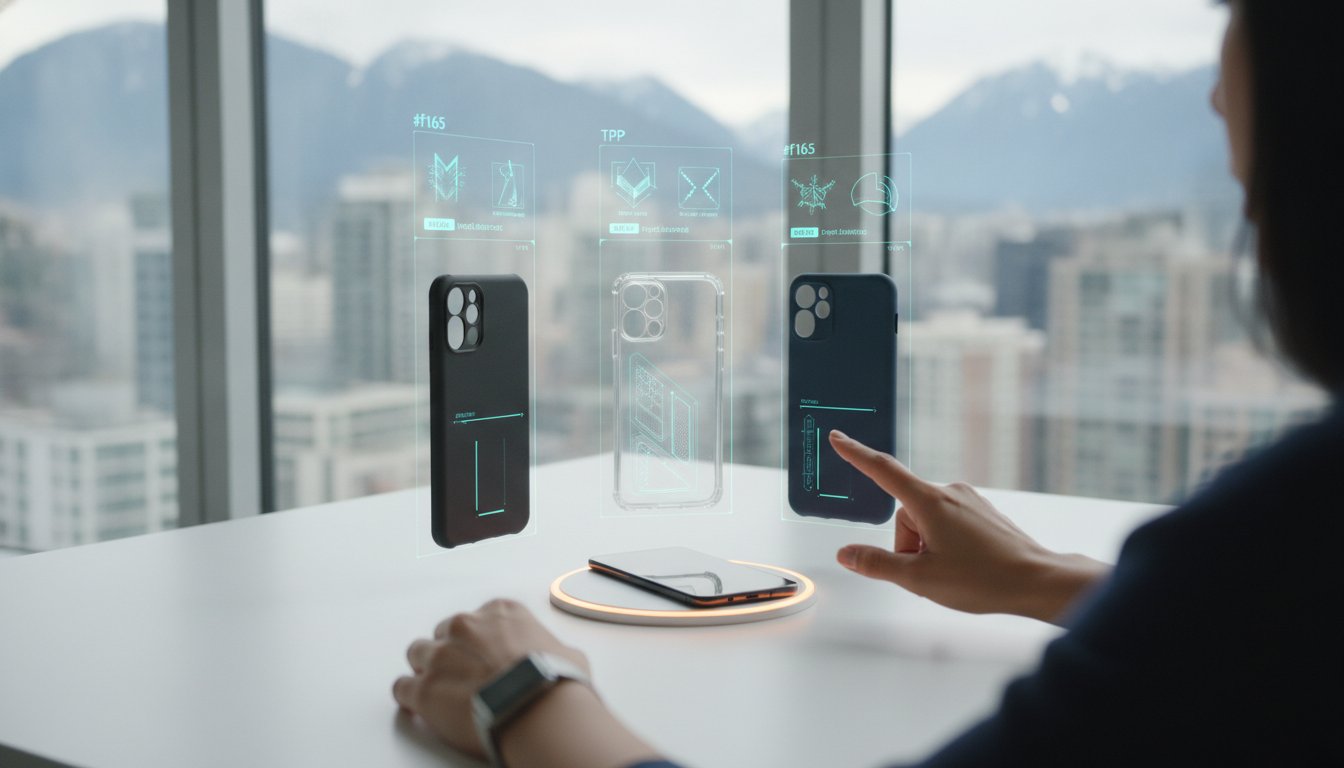
Most "military-grade" labels on the market today are self-tested marketing claims rather than independent certifications. While the MIL-STD-810H standard remains the benchmark for durability, many users realize too late that a rugged exterior often comes at the expense of daily functionality. It is common to feel frustrated when a protective shell interferes with your 25W Qi2 wireless charging or prevents your device from seating properly in a docking station. Understanding how to choose a phone case in 2026 requires looking past the jargon to focus on material science and ecosystem compatibility.
You deserve a solution that balances technical durability with a slim, professional aesthetic. This guide provides a systematic approach to selecting protection that works with your hardware, not against it. We will analyze the performance differences between TPU, silicone, and polycarbonate. We also examine how to verify compatibility with screen protectors and high-speed hubs, ensuring your iPhone 17 or Samsung Galaxy remains both safe and fully functional in a fast-paced digital environment. By the end of this guide, you will be able to identify the exact balance of weight and protection your lifestyle demands.
Key Takeaways
- Differentiate between TPU, silicone, and polycarbonate to select a material that provides optimal impact absorption without unnecessary bulk.
- Learn how to choose a phone case that maintains high-speed induction efficiency for the latest Qi2 charging standards and MagSafe accessories.
- Understand the technical limitations of military-grade drop testing to ensure your iPhone 17 or Samsung Galaxy remains protected against corner impacts.
- Identify specific case designs that prevent common interference issues with tempered glass screen protectors and multi-port smart hubs.
- Apply a systematic purchase checklist to organize your selection process based on your daily functional needs and professional risk environment.
Evaluating Protection Levels and Impact Resistance
Protecting a high-value device requires more than just a layer of plastic. When considering how to choose a phone case, you must prioritize how a design manages kinetic energy. The primary risks to your hardware include screen shatters, catastrophic corner impacts, and internal component vibration that can loosen delicate connectors over time. Modern smartphones are dense. A fall from pocket height generates significant force that must be diverted away from the glass to prevent structural failure.
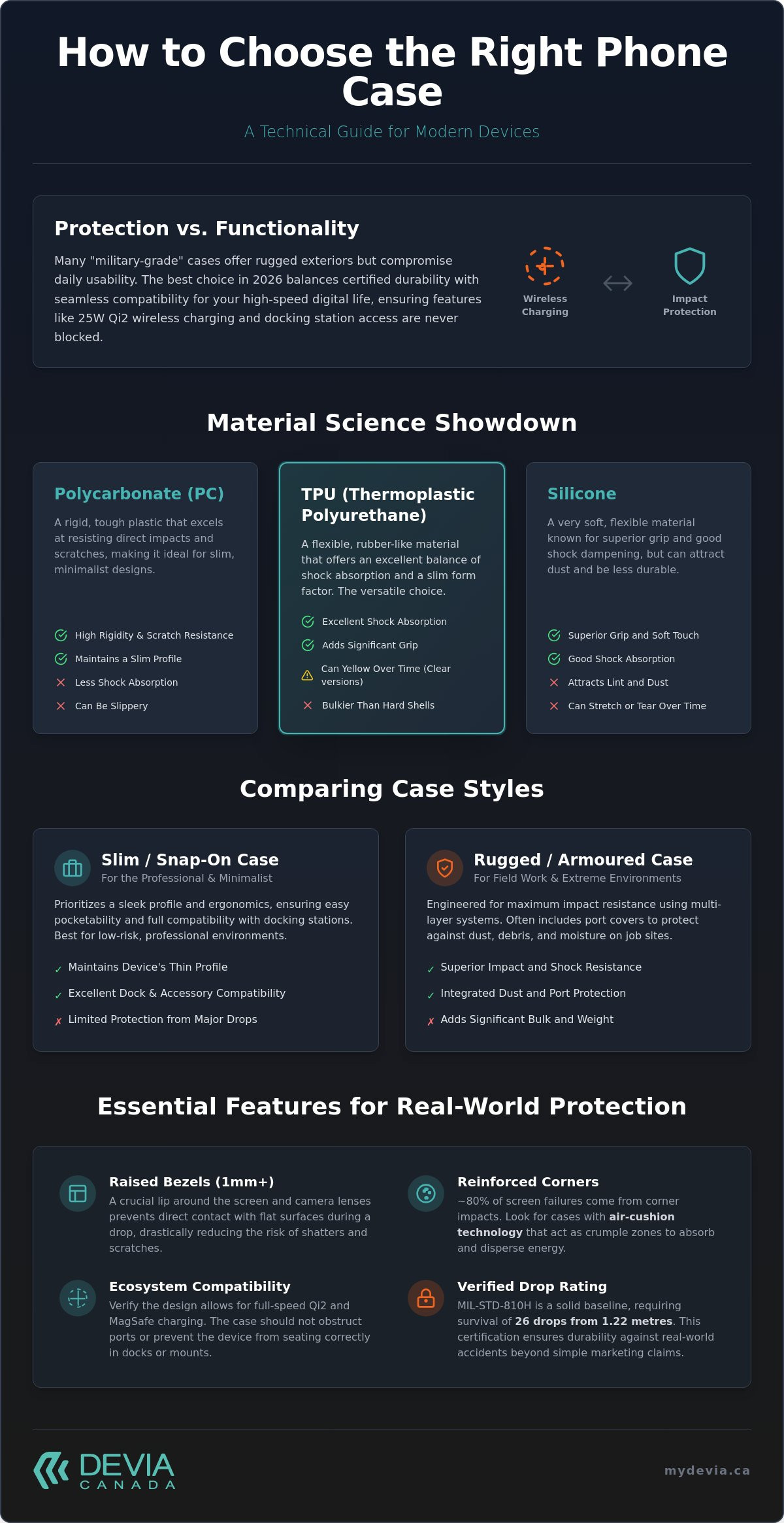
Effective protection starts with the physics of the raised bezel. A 1mm lip around the screen and camera housing prevents direct contact with flat surfaces during a face-down drop. This simple feature is often more critical than the overall thickness of the case. Additionally, professional grade cases utilize air-cushion technology. These internal air pockets, located at the interior corners, act as crumple zones. They compress upon impact, slowing the deceleration of the phone and dispersing energy through the case material rather than the device chassis. For a broader overview of phone case styles, checking technical classifications helps identify which designs prioritize these mechanical features.
Corner Reinforcement: The Critical Failure Point
Industry observations suggest that approximately 80% of screen failures result from corner-first impacts. When a phone hits a corner, the force is concentrated on a tiny surface area, causing the frame to flex and the glass to spiderweb. High-performance mobile phone cases solve this by using variable material density. Instead of uniform thickness, these cases feature reinforced bumpers with higher shore hardness on the exterior and softer, energy-absorbent layers on the interior to dampen shocks.
Drop Rating Realities for 2026 Devices
Marketing claims of 12-foot drop protection can be misleading. Real-world variables like surface texture and impact angle often change the outcome. As devices like the iPhone 17 Pro Max increase in weight, the kinetic energy during a fall rises. When researching how to choose a phone case for these larger models, look for ratings that account for this increased mass. The MIL-STD-810G is a military testing protocol that requires a device to survive 26 drops from a height of 1.22 metres on all faces, edges, and corners. While this provides a baseline for durability, choosing samsung cases or iPhone protection that exceeds these minimum requirements is advisable for high-value professional hardware.
Comparing Case Styles: Slim, Rugged, and Functional
Selecting the right silhouette is a primary step in understanding how to choose a phone case. The market currently divides into four distinct categories: slim, rugged, folio, and clear. Each serves a specific functional profile depending on whether you work in a corporate office or a construction site. Your choice should reflect a technical calculation of risk versus utility, ensuring the form factor does not hinder your daily productivity.
The Minimalist Profile for Professionals
Slim or "snap-on" cases prioritize a minimalist profile. These are typically constructed from a single layer of polycarbonate or thermoplastic polyurethane. They are designed for users who value pocketability and want to maintain the slim ergonomics of their iPhone 16 or 17. A significant advantage for professionals is their compatibility with peripheral hardware. Slim designs ensure your device fits seamlessly into USB-C docking stations without requiring the removal of the case. This efficiency is vital for multi-device workflows where frequent docking and undocking is required. However, these cases have material limitations; their thin rigidity means they offer less shock absorption compared to multi-layer designs.
Maximum Protection: When to Choose Rugged
Rugged cases are engineered for maximum impact resistance in industrial or outdoor settings. These armoured designs utilize a multi-material layering system. A hard polycarbonate outer shell provides structural integrity, while a soft silicone or TPU inner lining absorbs shock. Integrated port covers are a standard feature here. These seals prevent dust, debris, and moisture from entering charging ports, which is essential for Canadian winters or dusty job sites. If your daily routine involves fieldwork or extreme environments, a rugged case is the logical choice. These models often feature aggressive textures to improve grip, reducing the likelihood of a drop in cold or wet conditions.
Folio and wallet cases offer a functional hybrid for those looking to consolidate their carry. These designs include a front cover that protects the screen while providing slots for Canadian IDs and credit cards. For users who prefer to showcase the original design of their hardware, clear cases are the standard. High-quality clear options are treated with UV-resistant coatings to prevent the yellowing commonly seen in cheaper materials. This allows the original colour of flagship devices like the iPhone 17 or Samsung Galaxy to remain visible while still providing a baseline of protection. Finding the right balance between these styles is the core of how to choose a phone case that lasts. Explore our range of mobile phone cases to find the technical fit for your device.
Material Science: Choosing Between Silicone, TPU, and Polycarbonate
The material composition of a protector determines its lifespan and protective capacity. When evaluating how to choose a phone case, three primary polymers dominate the industry: Silicone, TPU, and Polycarbonate. Polycarbonate (PC) provides the rigid hard-shell layer required for structural integrity and superior scratch resistance. In contrast, Silicone offers a soft-touch feel and high friction, though it frequently attracts pocket lint and dust. Thermoplastic Polyurethane (TPU) serves as the industry "sweet spot," providing the flexibility of silicone with the durability of harder plastics. By 2026, sustainable materials like compostable polymers and recycled plastics have also become standard for environmentally conscious users.
TPU vs. Silicone: The Tactile Debate
Friction coefficients play a major role in daily use. Silicone cases have a high-grip surface that prevents a phone from sliding off a car console or desk. However, this same friction makes them difficult to slide into tight pockets. TPU is smoother and more resistant to oils and fingerprints, making it easier to maintain over time. In Canada, temperature shifts are a critical factor. Silicone remains stable in extreme cold, whereas lower-quality plastics may become brittle. TPU maintains its elasticity across a broad temperature range, ensuring the case does not crack during a Canadian winter. This makes TPU a more reliable long-term choice for users in varying climates.
Hybrid Construction: The Best of Both Worlds
The most effective designs for iphone 17 cases utilize hybrid construction. These models combine a PC backplate with a TPU bumper. This dual-layer approach prevents "case stretch," a common issue where all-silicone cases lose their shape and fit loosely over several months. While polycarbonate consists of rigid linear polymer chains that provide structural strength, TPU is a block copolymer that alternates hard and soft segments to achieve high elasticity and shock absorption. This combination ensures the case remains firmly attached to the device while providing a sophisticated defense against drops. Understanding these material properties is essential when learning how to choose a phone case that offers long-term reliability and a precise fit for your hardware.
- Polycarbonate: High impact resistance, rigid, and transparent options available.
- TPU: Excellent shock absorption, oil resistant, and highly flexible.
- Silicone: Superior grip, soft texture, and heat resistant.
- Recycled Plastics: Reduced environmental footprint with comparable durability to virgin polymers.
Ensuring Compatibility with Your Device Ecosystem
A smartphone serves as the centre of a professional ecosystem. When researching how to choose a phone case, you must evaluate how the design interacts with external hardware. The 2026 Qi2 standard allows for 25W wireless charging, but this efficiency relies on minimal distance between the induction coils. Cases exceeding 2mm in thickness can significantly reduce charging speeds or cause excessive heat buildup. Professional users should prioritize cases with integrated magnetic arrays to ensure a secure, efficient connection with car mounts and multi-device charging stations.
Port access is another functional hurdle. While many generic cases feature small cutouts, high-performance cables often have reinforced, oversized housings. If the case cutout is too narrow, the connector won't seat fully, leading to intermittent charging or data transfer failures. This is a critical consideration for users of the Leopard Series 11-in-1 Hub. The physical footprint of a professional docking station requires a case that doesn't obstruct the USB-C connector housing or prevent the phone from resting securely on the integrated stand. Efficiency in a multi-device workflow depends on these technical clearances.
MagSafe and Magnetic Connectivity
Internal magnet arrays are no longer optional for flagship devices. They provide the mechanical alignment necessary for high-speed power delivery. Without these magnets, a phone can easily vibrate out of alignment on a desktop stand or vehicle mount, stopping the charging process entirely. High-quality cases use N52 neodymium magnets to ensure the connection remains stable even under heavy vibration. This magnetic synergy allows your device to transition seamlessly from a mobile environment to a stationary desk setup without the need to remove protective layers.
Screen Protection and Case Synergy
Screen protector synergy is a frequent point of failure in device setups. Many edge-to-edge displays on the iPhone 17 series suffer from "lift" when a case lip is too aggressive. A "case-friendly" design leaves a precise micro-gap between the case edge and the glass. This prevents the case from pushing against the edges of your iPhone 17 screen protector, which would otherwise cause air bubbles or adhesive failure. It also reduces dust buildup in the crevice where the two components meet, maintaining the aesthetic and functional integrity of your display. Mastering how to choose a phone case means looking at the device as a unified system rather than a collection of separate parts.
Ensure your setup remains efficient by selecting from our verified mobile phone cases that guarantee full hardware compatibility.
Final Selection Framework: The Ultimate Purchase Checklist
Finalising the decision on how to choose a phone case requires a logical assessment of your hardware and habits. A mismatch between your case and your daily workflow leads to unnecessary friction and potential device damage. Use this five-step technical framework to ensure your selection meets professional standards for 2026 devices.
- Step 1: Confirm exact model numbers. Dimensions for the iPhone 17 and iPhone 17 Pro differ. Verify your specific model in settings to avoid fitment issues.
- Step 2: Identify your primary risk environment. Corporate office settings favour slim profiles. Fieldwork and industrial sites require multi-layer rugged protection.
- Step 3: Verify peripheral compatibility. Ensure the case supports 25W Qi2 charging and integrates with high-performance hardware like the Leopard Series 11-in-1 Hub.
- Step 4: Evaluate tactile preference. Matte finishes provide superior grip in cold Canadian climates. Smooth gloss finishes offer a cleaner aesthetic but lower friction.
- Step 5: Select a reputable Canadian retailer. Local vendors provide faster national shipping and accessible technical support for warranty claims.
Common Mistakes to Avoid
Prioritizing aesthetic style over a verified drop-rating is a high-risk error for flagship hardware. Ultra-rugged cases provide maximum safety but add significant weight. This can cause fatigue during extended handheld use. Additionally, never assume backward compatibility. iPhone 16 cases do not fit the iPhone 17 due to altered camera modules and button placements. Buying for the wrong generation is the most frequent cause of returns in the e-commerce sector.
Why Choose Devia for Your 2026 Device?
We provide a curated selection of iPhone 17 cases engineered for the Canadian professional. Our designs focus on technical precision and seamless integration with the Leopard Series productivity ecosystem. Choosing Devia ensures your device is protected by materials tested for impact resistance and ecosystem synergy. We offer fast national shipping across Canada and expert technical support to help you understand how to choose a phone case that fits your specific workflow. Protect your investment with hardware designed for the modern marketplace.
Securing Your 2026 Tech Ecosystem
Protecting a flagship device like the iPhone 17 or a Samsung Galaxy requires a technical understanding of material physics and hardware synergy. You now understand that effective protection depends on high-quality hybrid materials like TPU and polycarbonate. You also recognize that maintaining compatibility with the Leopard Series ecosystem and high-speed Qi2 charging is vital for professional productivity. Mastering how to choose a phone case allows you to move past marketing jargon to find a solution that balances durability with your daily functional needs.
Devia provides professional-grade materials and impact protection specifically engineered for the latest hardware. Our collection ensures your device remains safe while fully integrating with multi-port hubs and screen protectors. We offer fast national shipping across Canada to get your gear to you without delay. Equip your smartphone with protection that matches its performance standards.
Explore the Devia Case Collection for iPhone and Samsung
Equipping your smartphone with the right protection is a direct investment in your long-term efficiency. You're now ready to select a case that works as hard as your hardware.
Frequently Asked Questions
How do I know if a case will fit my specific phone model?
Verify your device identity by navigating to Settings, then General, and selecting About. Manufacturers frequently alter camera module dimensions and button placements between iterations. For example, an iPhone 16 case will not align with an iPhone 17. Always match the model name exactly to ensure full port access and sensor functionality.
What is the most protective material for a phone case?
A hybrid construction using a Polycarbonate backplate and TPU bumpers is the professional standard for 2026. This combination provides structural rigidity and impact dissipation. Premium models may also incorporate aramid fibre for high tensile strength. Understanding these material properties is essential when learning how to choose a phone case for high-value hardware.
Does a thicker case always mean better protection?
Thickness does not correlate directly with safety. Protection depends on kinetic energy dispersion rather than bulk. A slim case with internal air pockets and high-density corner bumpers often provides superior protection compared to a thick, soft silicone shell. Focus on the drop rating and material science instead of physical dimensions.
Will my phone case interfere with wireless charging or MagSafe?
Interference occurs if the material exceeds 2mm in thickness or lacks magnetic alignment. Ensure your case is MagSafe Compatible to support the 2026 Qi2 25W charging standard. Cases with internal magnet arrays prevent the phone from shifting out of the charging centre, which maintains induction efficiency and prevents heat buildup.
Do I really need a screen protector if I have a rugged case?
A rugged case provides a raised bezel, but it cannot prevent scratches from abrasive debris. Integrating a tempered glass protector ensures 360 degree safety. This is especially important for edge to edge displays where the glass remains exposed to direct contact on uneven surfaces or inside pockets with keys.
How often should I replace my phone case for maximum safety?
Replace your case every 12 to 18 months or immediately after a significant drop. Polymers lose their structural integrity and elasticity over time due to UV exposure and temperature shifts. A case that has already absorbed a high velocity impact may have internal micro fractures that compromise its ability to protect the device again.
Can a phone case cause my device to overheat during fast charging?
Thermal management is a factor during 25W fast charging as heavy cases can act as insulators. This traps heat and may cause the device to throttle charging speeds to protect the battery. Professionals should select cases with slim backplates or materials that allow for efficient heat dissipation during high output power cycles.
What is the difference between a snap case and an armoured case?
Snap cases are minimalist, single layer shells designed for basic scratch protection and low bulk. Armoured cases feature multi layer protection, often combining a soft inner core with a hard outer frame. Knowing how to choose a phone case involves deciding if you need the pocketability of a snap case or the industrial durability of an armoured design.