

Best iPhone 13 Case Options for Long-Term Use in 2026
2026 Jul 23rd
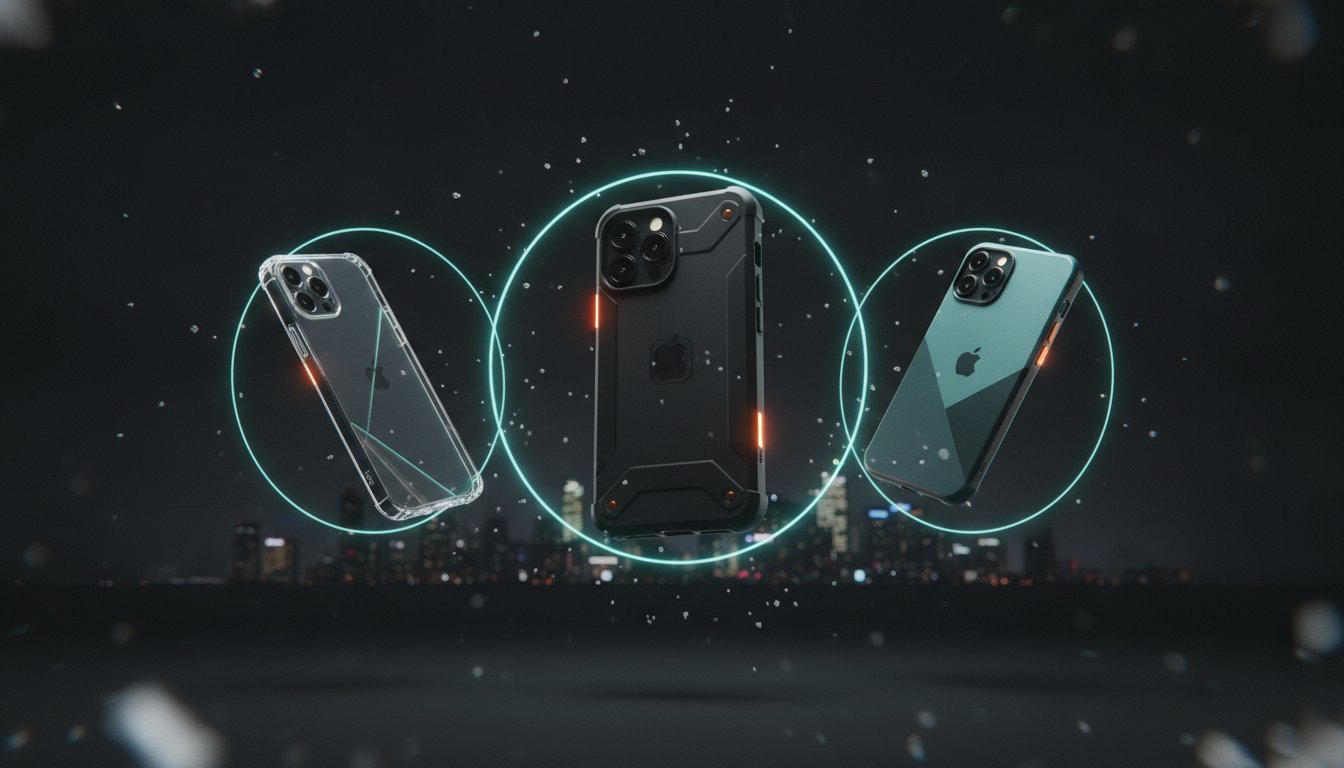
Your iPhone 13 still runs beautifully, so why are you settling for a case that's cracking, yellowing, or killing your MagSafe signal? It's a fair question, and one that more Canadian iPhone users are asking as they commit to getting more years out of their devices rather than upgrading on a manufacturer's schedule.
You already know the stakes. A single winter drop on an icy sidewalk, a case that swells in your pocket, or a yellowed clear shell that makes a premium phone look neglected. These aren't minor inconveniences; they're daily friction points that a well-chosen iPhone 13 case should eliminate entirely.
This guide cuts through the noise. You'll find clear, practical guidance on what to look for in a case built to last through Canadian winters, stay slim enough for everyday carry, and maintain full compatibility with modern MagSafe chargers. From military-grade drop protection to professional slim profiles that pair cleanly with a docking station setup, here's exactly what to consider before you buy in 2026.
Key Takeaways
- The right iPhone 13 case does more than prevent cracks — it actively preserves your device's resale value and keeps it performing like new through 2026 and beyond.
- Material choice is everything: you'll learn exactly how TPU, polycarbonate, and air-cushion technology differ in real-world drop protection, so you can match the spec to your lifestyle.
- Canadian winters demand more from a case than most guides admit — discover which materials stay flexible at -30°C and which ones become a liability the moment temperatures drop.
- Choosing the ideal iPhone 13 case comes down to knowing your daily environment, and this guide maps every major case style — from slim professional profiles to full rugged armour — to the right use case.
- Devia offers a curated range of iPhone 13 cases built for the modern Canadian user, with options that integrate cleanly into a broader tech setup including docking stations and Apple Watch accessories.
Protecting Your iPhone 13 in 2026: Why Quality Cases Still Matter
The iPhone 13 is not a relic. In 2026, it still runs the latest supported iOS builds, handles demanding apps without hesitation, and delivers camera performance that holds up against newer mid-range competitors. Yet most case guides have quietly dropped it from their recommendations, defaulting to iPhone 17 coverage as if everyone upgrades on Apple's preferred schedule. That's a gap worth addressing directly.
Device longevity in 2026 refers to the deliberate practice of maximising a smartphone's functional and aesthetic lifespan well beyond its original release cycle, and it's reshaping how Canadians approach mobile phone accessories across the board. A quality iPhone 13 case is no longer a basic accessory purchase; it's a calculated decision to protect a still-capable asset.
There's also a protection gap that most manufacturers won't mention. As batteries age and internal components accumulate micro-stress from years of daily use, devices become progressively more vulnerable to shock damage. The rigid tolerances that kept everything snug at launch gradually loosen. That means your iPhone 13 actually needs better shock absorption in 2026 than it did in 2021, not equivalent protection. A case that was adequate three years ago may no longer be sufficient.
The Longevity Factor: Extending Device Life
A well-fitted case does two things simultaneously: it maintains structural integrity by reducing internal component rattle during drops and impacts, and it preserves the aesthetic condition of the glass back and aluminium frame against micro-scratches that accumulate invisibly over time. Both matter. The frame scratches are cosmetic; the internal rattle is a warning sign. A quality iPhone 13 case addresses both without compromise.
Resale Value and the Canadian Trade-in Market
Canadian retailers apply strict grading to trade-in devices. "Mint Condition" status consistently commands higher credits than "Good" or "Fair" grades, and the difference is often significant enough to offset the cost of a premium case several times over. The cost-benefit analysis is straightforward: a well-chosen case purchased today protects your device's trade-in position when you're ready to upgrade.
Screen damage is the most common reason devices lose grade status. For a complete picture of display protection strategy, the iPhone 17 screen protector guide outlines current best practices that apply equally well to maintaining any iPhone's display in top condition.
The sustainable materials shift in the 2026 case market reinforces this logic. More manufacturers are producing cases built to last the device's full lifespan rather than requiring annual replacement, which means a single smart purchase now can carry your iPhone 13 cleanly through its remaining years of use.
Material Science: Understanding Durability and Drop Protection Standards
Not all protective materials perform equally, and the difference isn't subtle. The core choice in any quality iPhone 13 case comes down to two primary polymers: Thermoplastic Polyurethane (TPU) and Polycarbonate (PC). Each has a distinct mechanical role, and understanding that role changes how you evaluate any case on the shelf.
TPU is a flexible elastomer. It deforms on impact, absorbing kinetic energy rather than transmitting it directly to the device's frame and internal components. That elasticity is also why TPU maintains its grip in cold conditions, a practical advantage in Canadian winters where rigid materials can become brittle. PC, by contrast, is a hard-shell polymer with high tensile strength. It resists scratching and distributes lateral impact across a wider surface area, but it doesn't compress. It deflects rather than absorbs.
Neither material alone is the optimal solution. That's where hybrid construction becomes the standard for serious protection. A soft TPU inner core contacts the iPhone 13 directly, cushioning shock at the point of impact. A rigid PC outer shell then spreads that force across the case geometry before it can concentrate on a single stress point. The result is a case that handles both the initial strike and the secondary stress wave that follows.
Air-cushion technology extends this principle further. Reinforced hollow chambers built into the case corners act as micro-crumple zones, compressing on impact to slow the deceleration of the device. This geometry-based protection is now standard in well-engineered 2026 case designs, and it's a meaningful upgrade over solid-material construction. As smartphone accessory trends tracked by Forbes confirm, corner-reinforced hybrid designs have become the benchmark for drop protection across the premium accessory category.
Raised bezels complete the picture. A lip of 1mm or more around the screen and camera module keeps both surfaces elevated when the phone lands face-down or lens-down on a flat surface. For the iPhone 13's prominent camera array, this detail isn't optional; it's the difference between a scuffed lens housing and an intact one.
Shock Absorption vs. Impact Resistance
These two terms describe different physical processes. Shock absorption is about dissipating kinetic energy over time; impact resistance is about withstanding force without structural failure. Military-grade MIL-STD-810G testing evaluates both, subjecting cases to repeated drops from defined heights across multiple surface types. A case carrying this certification has passed a standardised protocol, not just a manufacturer's internal benchmark. Tactile button covers are part of this equation too: stiff, unresponsive buttons signal material degradation, while precise click response indicates the TPU layer is still performing as engineered.
The Evolution of Scratch-Resistant Coatings
Clear cases face a specific durability challenge: yellowing. UV exposure degrades standard TPU over time, shifting transparent cases to an amber tint that makes any iPhone look worn. Anti-yellowing formulations use UV-stabilising additives to slow this process significantly. Oleophobic coatings reduce fingerprint transfer on both clear and opaque surfaces, keeping professional-grade covers looking clean through daily handling. Some 2026 materials now incorporate self-healing polymer layers, thin topcoats that use ambient heat to reflow around minor surface scratches. The effect is gradual rather than instant, but it meaningfully extends the visual lifespan of a case over months of use.
If you're evaluating which construction type fits your daily environment, browse Devia's iPhone 13 case range to compare hybrid and slim-profile options side by side.
Comparing Case Styles: From Minimalist Sleeves to Heavy-Duty Armour
Selecting the right iPhone 13 case in 2026 requires more than just picking a colour. Your choice dictates how the device integrates into your daily workflow and how it survives specific environmental hazards. While material science provides the foundation, the case's physical architecture determines its utility. Most users fall into one of four categories: the urban professional, the outdoor enthusiast, the minimalist commuter, or the tech-integrated power user.
MagSafe compatibility is a non-negotiable standard for 2026 wireless chargers. A case without high-grade integrated magnets results in inefficient charging and poor alignment, which can lead to heat buildup and battery degradation. Modern designs ensure that even thicker rugged shells maintain a strong magnetic bond, allowing for seamless use with car mounts and desktop stands.
The Professional Minimalist Approach
Slim profile cases are designed for those who prioritize pocketability and the original iPhone 13 silhouette. These designs focus protection on the four corners while keeping the side rails thin. This approach is essential for users of the Devia Leopard Series Docking Station. A bulky case often prevents a secure connection with high-performance hubs; a slim profile ensures your phone sits correctly in the stand for fast charging and data transfer.
- Aesthetic: Matte finishes and deep colours like midnight blue or slate grey that complement professional attire.
- Safety: Reinforced corner bumpers that absorb impact without adding width to the device.
- Utility: Precision cutouts for the Lightning port and speakers to ensure zero interference with cables.
Rugged Protection for Extreme Environments
For outdoor enthusiasts or those on active worksites, maximum protection is the priority. Rugged armour cases utilize the multi-layer hybrid construction discussed previously but add physical barriers against the elements. In the Canadian climate, moisture and debris are constant threats to hardware longevity.
Port covers are a critical feature here. They keep melting snow, road salt, and dust out of the Lightning port, preventing corrosion over time. These cases also feature aggressive grip textures. This design choice isn't just for aesthetics; it's a functional necessity to prevent drops when you're wearing winter gloves or handling the device in wet conditions. High-altitude environments or high-impact scenarios require this level of physical shielding to keep the iPhone 13 functional through another Canadian winter.
Wallet cases offer a different type of utility, consolidating your carry by integrating card slots into the protective shell. While these add more bulk than a minimalist sleeve, they provide a built-in screen cover that adds a layer of physical protection against keys or coins in a bag. Regardless of the style you choose, the goal is a balance of modern aesthetics and the rugged durability required for long-term use.

Selecting the Right Case for the Canadian Climate and Lifestyle
Canada's climate doesn't offer a single challenge; it offers several. From -30°C prairie winters to humid Maritime summers to the UV intensity at high elevation in British Columbia, your iPhone 13 case faces environmental stressors that most global buying guides simply don't account for. Material performance under these conditions isn't a minor consideration. It's the primary one.
Thermal stability is where many cases fail silently. Standard silicone compounds lose their elasticity in deep cold, stiffening to the point where they no longer absorb impact effectively. A case that performs well at 20°C can become a rigid shell at -20°C, offering far less actual protection than its spec sheet suggests. The ideal winter-proof iPhone 13 case material for 2026 is a high-grade TPU compound specifically formulated to retain flexibility below -25°C, often reinforced with a polycarbonate outer shell that maintains structural integrity without becoming brittle.
Moisture resistance matters across all four seasons, not just winter. Melting snow in March, summer humidity in Ontario, and coastal rain in Vancouver all create the same risk: moisture infiltrating the Lightning port and speaker grilles over time. Cases with tight-fitting port covers and raised speaker channels provide a meaningful barrier without requiring full waterproofing, which adds unnecessary bulk for everyday carry.
UV exposure is an underrated concern in Canadian summers, particularly at altitude. Extended sun exposure accelerates polymer degradation in clear cases, causing the yellowing discussed in the materials section. For users who spend significant time outdoors between June and August, UV-stabilised formulations aren't optional; they're what separates a case that looks clean after one season from one that looks neglected.
Winter-Ready Protection Strategies
Grip texture becomes a functional safety feature the moment temperatures drop. Smooth-sided cases that feel secure in a climate-controlled office become genuinely hazardous on an icy parking lot or ski hill. Textured side rails, micro-pattern grip surfaces, and matte finishes all reduce slip risk when wearing gloves or handling the device with cold, damp hands. This isn't a design preference; it's a practical requirement for Canadian winters.
Outdoor Adventure vs. Urban Commute
Weekend hikers in the Canadian Rockies and daily commuters in downtown Toronto have different case requirements, but both benefit from a versatile hybrid construction that handles variable conditions without switching gear. Rugged single-purpose cases make sense for dedicated outdoor use; for cross-country travellers moving between environments, a hybrid case with textured grip, raised bezels, and MagSafe-compatible magnets covers the full range. For a broader overview of matching case styles to specific lifestyles, the Phone Cases 101 guide provides a practical framework.
Ready to find an iPhone 13 case built for Canadian conditions? Browse Devia's full iPhone 13 case selection to compare materials, profiles, and protection ratings in one place.
Why Devia is Canada's Source for Premium iPhone 13 Accessories
Finding a quality iPhone 13 case from a Canadian retailer isn't as straightforward as it sounds. Large third-party marketplaces offer volume, but volume without curation means inconsistent materials, unreliable MagSafe alignment, and no coherent compatibility story across your broader tech setup. Devia takes a different approach: a focused, high-performance selection built around how Canadian users actually work and carry their devices.
Every iPhone 13 case in Devia's catalogue is selected for material quality, long-term clarity, and technical compatibility with modern charging and productivity setups. That means UV-stabilised formulations that resist yellowing through multiple Canadian summers, TPU compounds that retain flexibility in sub-zero temperatures, and precise magnet placement that delivers reliable MagSafe alignment rather than approximate contact. These aren't marketing claims; they're the functional baseline for any case that earns a place in the range.
The Devia Tech Advantage
Devia's value proposition extends well beyond individual case selection. For users who've built a desk setup around the multi-device charging stations in Devia's ecosystem, case choice directly affects how cleanly the iPhone 13 integrates into that workflow. Slim-profile cases with precise port cutouts connect without friction to docking hubs. Bulkier third-party shells often compromise that connection, introducing alignment issues that interrupt fast charging and data transfer.
- Ecosystem compatibility: Cases are selected to work alongside Devia's docking stations, iPad cases, and Apple Watch accessories without conflict.
- Desk-ready profiles: Slim and hybrid case designs sit correctly in stands and charging hubs without requiring case removal.
- Direct support: Canadian customers have access to knowledgeable product support rather than automated third-party ticketing systems.
Commitment to Canadian Tech Users
Choosing a Canadian retailer for tech hardware matters in practical terms. National shipping reach means your iPhone 13 case arrives on a reliable timeline, whether you're in Vancouver, Winnipeg, or Halifax. There's no ambiguity about customs delays, cross-border duties, or compatibility discrepancies between regional product variants.
Devia's focus is high-utility hardware that simplifies your digital life rather than complicating it. Apple Watch accessories, iPad cases, screen protectors, and phone cases are all sourced and curated with the same compatibility logic, so building out a complete setup doesn't require sourcing from five different retailers with five different quality standards.
If you've worked through this guide and know what you need, the next step is straightforward. Browse the full iPhone 13 case collection to compare protection ratings, profiles, and materials in one place, and find the exact fit for your daily environment.
Your iPhone 13 Is Worth Protecting Right
The decision is straightforward once you have the right information. Material quality determines how your iPhone 13 case performs in Canadian winters. Case profile determines how cleanly it integrates with your broader tech setup, including Leopard Series docking station compatibility. And choosing a Canadian retailer means national shipping reach without the guesswork of cross-border delays or compatibility gaps.
Three things to carry forward: prioritise UV-stabilised, cold-flexible materials for year-round durability; match your case profile to your daily environment rather than defaulting to the thickest option available; and treat your case as part of a complete protection and productivity setup, not an afterthought purchase.
Your iPhone 13 still has years of capable performance ahead of it. The right case keeps it there, structurally sound, visually clean, and ready for whatever your day demands.
Shop premium iPhone 13 cases at Devia Canada and find the exact fit for your lifestyle, with professional-grade durability and national shipping across Canada.
Frequently Asked Questions About iPhone 13 Cases
Will an iPhone 13 case fit the iPhone 14 or iPhone 15?
No. Despite similar dimensions, the iPhone 13 and iPhone 14 have different camera module placements, button positions, and frame tolerances. A case engineered for the iPhone 13 won't align correctly on an iPhone 14 or 15, leaving cutouts misaligned and protection compromised. If you're using multiple Apple devices, Devia offers dedicated cases for iPhone 14, 15, 16, and 17 models, each precision-fitted to that specific device's geometry.
How do I prevent my clear iPhone 13 case from turning yellow?
Choose a clear case made with UV-stabilised TPU rather than standard transparent silicone. UV-stabilising additives slow the photodegradation process that causes amber discolouration over time. Practical habits help too: avoid leaving your phone face-down in direct sunlight for extended periods, and wipe the case regularly with a damp microfibre cloth to remove oils that accelerate surface degradation. No clear case is permanently immune, but UV-stabilised formulations last significantly longer between replacements.
Are MagSafe cases necessary for the iPhone 13 in 2026?
Not strictly necessary, but practically valuable. The iPhone 13 has built-in MagSafe magnets, and a compatible case preserves that alignment for wireless chargers, car mounts, and desk stands. A case without properly positioned magnets weakens the magnetic bond, causing heat buildup and inconsistent charging. In 2026, with MagSafe accessories now standard across most desk setups, a MagSafe-compatible iPhone 13 case keeps your charging workflow intact without requiring workarounds.
What is the most protective material for a smartphone case?
No single material is the answer. The most protective construction combines a flexible TPU inner layer, which absorbs and dissipates kinetic energy on impact, with a rigid polycarbonate outer shell that distributes force across the case geometry. Air-cushion corner reinforcement adds a third layer of protection by creating controlled compression zones at the points most vulnerable to drop damage. This hybrid approach consistently outperforms single-material designs in standardised drop testing.
Can I use a screen protector with a heavy-duty rugged case?
Yes, and it's recommended. A rugged case raises the device's side rails to protect the screen from face-down drops, but it doesn't shield the display from direct impact or scratching. A tempered glass screen protector addresses that gap. The key is ensuring the protector's edge dimensions are compatible with the case's inner lip; some rugged cases have a tighter inner fit that requires a slightly smaller-cut protector to avoid lifting at the edges. Check compatibility specifications before purchasing both.
How often should I replace my phone case for maximum safety?
Replace your case when you notice visible cracking, deformation at the corners, or buttons that have lost their tactile response. These are functional indicators, not just cosmetic ones. A cracked corner can no longer compress on impact; degraded button covers signal TPU breakdown throughout the case. As a general practice, inspect your case every six to twelve months. If it's taken a serious drop, inspect it immediately, since internal stress fractures aren't always visible on the surface.
Do Devia cases support fast wireless charging for the iPhone 13?
Devia's iPhone 13 cases are selected for compatibility with wireless charging standards, including MagSafe alignment. Case thickness is the primary variable that affects wireless charging efficiency; cases that are too thick or use metallic components can reduce power transfer. Devia's slim and hybrid case profiles are designed to maintain a reliable charging connection without requiring case removal. For specific charging speed compatibility, check the product specifications for the individual case you're considering.
How do I clean my iPhone 13 case without damaging the finish?
For TPU and polycarbonate cases, a damp microfibre cloth with mild soap handles most dirt and oil buildup effectively. Avoid alcohol concentrations above 70%, abrasive cloths, or solvent-based cleaners; these strip oleophobic coatings and accelerate surface dulling on matte finishes. For textured grip surfaces, a soft-bristle brush helps dislodge debris from the pattern without scratching. Always remove the case from your iPhone before cleaning, and let it dry completely before reinstalling.